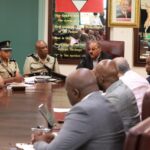

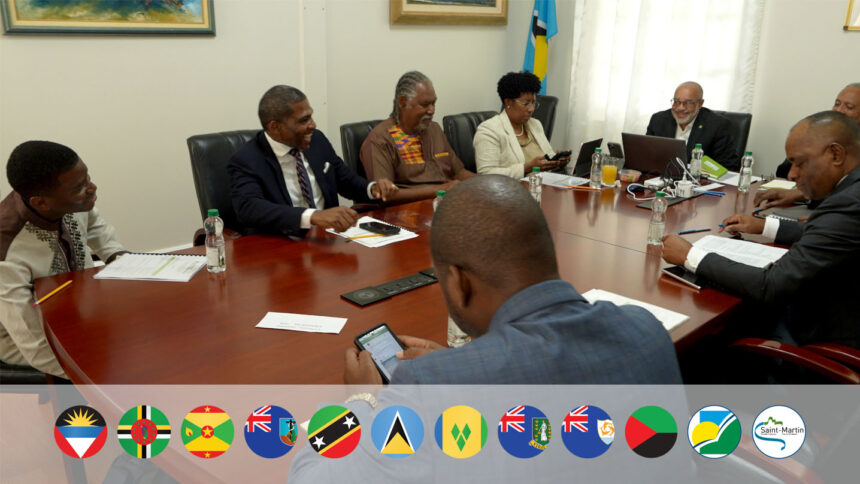
The cost of living, regional transportation, trade, and the future of Citizenship by Investment (CBI) programmes topped the agenda when Heads of Government of the Organisation of Eastern Caribbean States (OECS) met in Antigua and Barbuda, with leaders emerging from the summit committed to a series of initiatives aimed at improving the lives of citizens across the sub-region.
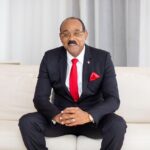
Prime Minister Gaston Browne, who chaired the meeting as Chairman of the OECS Authority, briefed Cabinet this week on the outcomes of the discussions, describing the gathering as productive and focused on practical solutions to some of the region’s most pressing economic challenges.
Among the most significant decisions was an agreement to pursue measures designed to ease the high cost of living that continues to affect households throughout the Eastern Caribbean. Leaders agreed to explore expanding trade with South American markets, Panama and the Dominican Republic in an effort to improve access to more competitively priced food and consumer goods.
Cabinet was informed that the OECS Commission has been tasked with identifying products that could qualify for a temporary suspension of the Caribbean Community (CARICOM) Common External Tariff (CET). Such a move would allow member states to import selected goods at lower costs, potentially reducing prices for consumers while helping governments address inflationary pressures that have persisted since the COVID-19 pandemic and subsequent global supply chain disruptions.
The Common External Tariff is a key feature of the CARICOM Single Market and Economy, establishing a uniform tariff on goods imported from outside the regional bloc. While it protects regional industries, member states have periodically sought temporary suspensions on specific products when shortages or unusually high prices threaten food security or place excessive financial pressure on consumers.
Regional transportation also featured prominently during the summit, with OECS leaders continuing discussions on improving air connectivity among member states. The issue has remained a longstanding concern for governments and businesses alike, as high airfare and limited flight options continue to hamper trade, tourism and labour mobility throughout the Eastern Caribbean.
According to the Cabinet report, proposals under consideration seek to reduce travel costs while making it easier for citizens and businesses to move throughout the sub-region. Improved transportation links are also expected to strengthen economic integration and support the broader objectives of the Revised Treaty of Basseterre, which established the OECS Economic Union.
Citizenship by Investment programmes also received considerable attention during the meeting amid continuing discussions with the European Union over proposals that could affect visa-free access for citizens of countries operating such programmes. OECS leaders agreed that a coordinated regional approach would be necessary to safeguard the interests of participating member states while preserving the integrity and sustainability of their investment migration programmes.
For Antigua and Barbuda and several other OECS member states, Citizenship by Investment programmes have become an important source of development financing, supporting major infrastructure projects, housing initiatives and economic recovery efforts in recent years. Regional leaders indicated they will continue engaging European officials to ensure that concerns surrounding programme governance are addressed while protecting the international mobility enjoyed by their citizens.
Institutional reform was another key area of discussion as Heads of Government examined ways to modernise the OECS and ensure that its institutions remain financially sustainable and responsive to emerging regional challenges. Cabinet was advised that leaders agreed the organisation must continue evolving to deliver greater value to member states while maintaining effective governance and operational efficiency.
The OECS, headquartered in Saint Lucia, comprises Antigua and Barbuda, Dominica, Grenada, Montserrat, Saint Kitts and Nevis, Saint Lucia, and Saint Vincent and the Grenadines as full members, with several associate members. Since the establishment of the OECS Economic Union in 2011, the organisation has sought to deepen regional integration through the free movement of people, goods, services and capital while encouraging greater cooperation in health, education, security and economic development.
Cabinet welcomed the outcomes of the meeting and commended Prime Minister Browne for his leadership during what it described as a period marked by significant regional and global challenges. The Government said the decisions taken by OECS leaders demonstrate a shared commitment to finding collaborative solutions that strengthen regional resilience while delivering tangible benefits to the people of the Eastern Caribbean.