

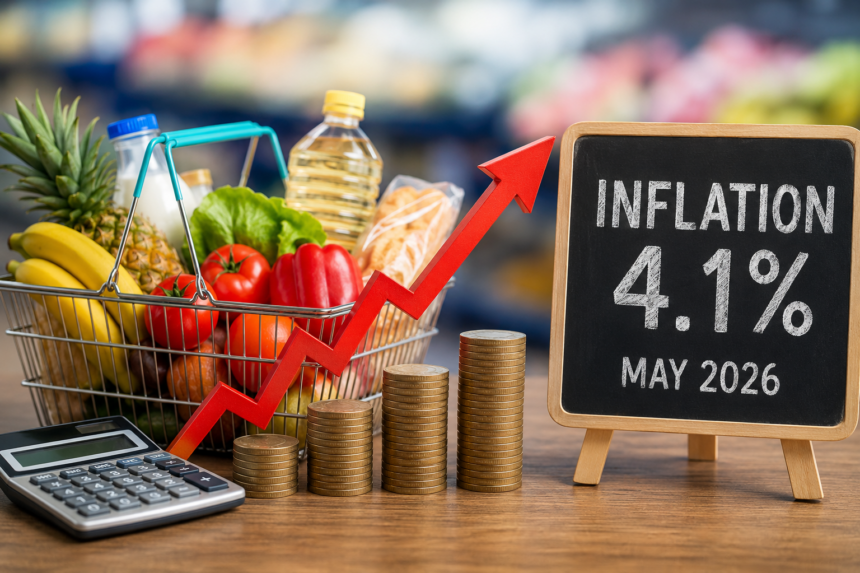
Antigua and Barbuda’s annual inflation rate rose to 4.1 per cent in May 2026, with higher housing and electricity costs continuing to place upward pressure on consumer prices, according to the latest Consumer Price Index (CPI) released by the National Bureau of Statistics.
The report showed that the Consumer Price Index increased by 4.1 per cent over the twelve-month period from May 2025 to May 2026, with the Housing, Water, Electricity, Gas and Other Fuels category emerging as the single largest contributor to inflation.
Prices within that category increased by 8.2 per cent over the year and accounted for nearly half of the overall rise in the All-Items CPI. Actual rental costs climbed by 6.3 per cent, while electricity prices increased by 25 per cent, reflecting continued pressure from energy-related costs. The Energy Index itself rose by 12 per cent during the period, largely due to an increase in the fuel variation charge.
Food prices also continued to trend upward, although at a more moderate pace. The Food and Non-Alcoholic Beverages index increased by 2.4 per cent year-on-year, with notable increases recorded in Food Products Not Elsewhere Classified and Vegetables, which rose by 8 per cent and 6.3 per cent respectively.
Beyond food and energy, the All-Items Less Food and Energy Index increased by 3.7 per cent, suggesting that broader inflationary pressures remain present across the economy. Recreation and Culture recorded one of the largest annual increases at 30.2 per cent, while Transport Services rose by 19.6 per cent and Education costs increased by 13.3 per cent.
On a month-to-month basis, the Consumer Price Index increased by 0.4 per cent between April and May 2026.
The monthly rise was driven primarily by higher prices for food and energy, partially offset by a significant decline in transport services.
Food and Non-Alcoholic Beverages increased by 0.9 per cent during the month, with supermarket prices rising across several key categories. Oils and Fats recorded the largest monthly increase at 7.1 per cent, followed by Fruit at 6.7 per cent, Meat and Meat Products at 5.6 per cent, Milk, Cheese and Eggs at 5.2 per cent, and Food Products Not Elsewhere Classified at 4.9 per cent.
Energy costs rose sharply over the month, increasing by 13 per cent as the Electricity Index surged by 27.3 per cent.
Meanwhile, the All-Items Less Food and Energy Index declined by 0.9 per cent, largely due to a 14.5 per cent reduction in Transport Services, providing some relief against broader price increases.
The latest figures suggest that while inflation remains moderate by regional standards, rising utility and housing costs continue to exert the greatest influence on household spending, with food prices also contributing to the overall increase in the cost of living.
The Consumer Price Index is the country’s principal measure of inflation and tracks changes in the prices paid by households for a fixed basket of goods and services over time. The National Bureau of Statistics publishes the index monthly to inform policymakers, businesses and the public about movements in consumer prices.