

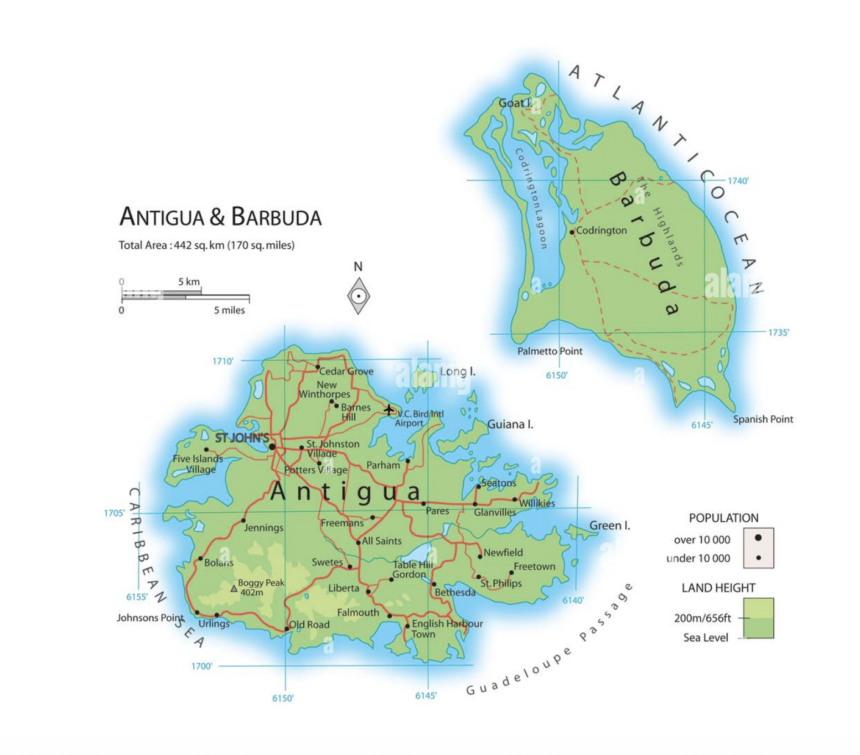
Plans to establish a formal Land Registry in Barbuda are progressing steadily, with Cabinet receiving an update this week on efforts to modernize the island’s land administration system and prepare for future ownership transactions and development.
Attorney General and Minister for Legal Affairs Sir Steadroy Benjamin told Cabinet that significant progress has been made in creating the legal and administrative framework necessary to operationalize the registry, which is expected to provide a structured mechanism for land registration and ownership matters.
Cabinet expressed satisfaction with the work completed so far, describing the initiative as an important step toward improving transparency, certainty and legal security in the management of land on the sister island.
During its deliberations, Cabinet reaffirmed its longstanding legal position that the Barbuda Council does not possess the authority to sell, lease or otherwise dispose of land in Barbuda.
According to the administration, any purported sale, lease or transfer of land by the Barbuda Council is without legal effect under the laws of Antigua and Barbuda and will not be recognized by the central Government.
Officials reiterated that all land transactions must be conducted through the appropriate legal channels and in accordance with national legislation governing land ownership and development.
The proposed Barbuda Land Registry is intended to provide greater certainty for property owners and investors by creating an official record of land ownership while strengthening transparency and accountability in land administration.
Land ownership in Barbuda has long been one of the country’s most contentious public policy issues. Unlike Antigua, where freehold ownership is well established, land in Barbuda has traditionally been held under a communal system rooted in the Barbuda Land Act and generations of customary practice.
Successive administrations have argued that reforms to the land tenure system are necessary to encourage investment and support economic development, while many Barbudans have maintained that communal ownership remains an essential part of the island’s heritage and identity.
Cabinet also reiterated that any structures erected without the necessary legal approvals or permissions will be regarded as unauthorized and subject to enforcement action under existing laws.
Where appropriate, this could include the demolition and removal of illegal structures to ensure compliance with planning regulations and protect the integrity of the land administration system.
Officials believe the creation of a modern land registry will enhance investor confidence by providing a clear and legally recognized framework for ownership while supporting orderly and sustainable development.
Cabinet maintained that all land-related activities in Barbuda must occur within the framework of the nation’s laws, with the overarching objective of protecting property rights and fostering responsible economic growth on the island.