
Negotiations between Antigua and Barbuda and the United States over the possible relocation of a limited number of third-country nationals remain ongoing, with Cabinet making it clear that any agreement will be governed by strict national security requirements and the country’s sovereign right to determine who may enter its borders.
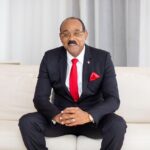
Prime Minister Gaston Browne updated Cabinet on the status of the discussions this week, advising that negotiations with U.S. officials have resumed following Antigua and Barbuda’s submission of a series of counterproposals. According to Cabinet, the dialogue has remained constructive, with both countries continuing to explore an arrangement that reflects their respective interests while preserving Antigua and Barbuda’s national priorities.
The negotiations are being led on Antigua and Barbuda’s behalf by Ambassador to the United States, Sir Ronald Sanders, who has been tasked with advancing the country’s position while ensuring that any eventual agreement complies with domestic laws and safeguards the welfare of citizens and residents.
Cabinet underscored that the Government has adopted a firm negotiating position, insisting that no individual with a criminal background will be considered for admission. Officials said Antigua and Barbuda has also demanded comprehensive due diligence on every prospective entrant, including detailed assessments covering criminal history, national security concerns and health status before any application receives consideration.
Prime Minister Browne further advised Cabinet that the Government will retain complete authority over all admission decisions, emphasizing that Antigua and Barbuda’s sovereignty cannot be compromised in the process.
“The Government of Antigua and Barbuda must retain the sovereign right to determine who may enter and reside within the country,” Cabinet was told during the Prime Minister’s briefing.
While discussions remain ongoing, Cabinet was informed that Antigua and Barbuda has indicated a willingness to consider accepting only a limited number of individuals each year, estimated at between 14 and 16 persons annually, subject to the country’s strict approval procedures.
Officials also noted that consideration would be given to individuals possessing professional skills and qualifications capable of contributing positively to national development and economic growth, suggesting that any future arrangement would be based not only on humanitarian considerations but also on the country’s long-term development objectives.
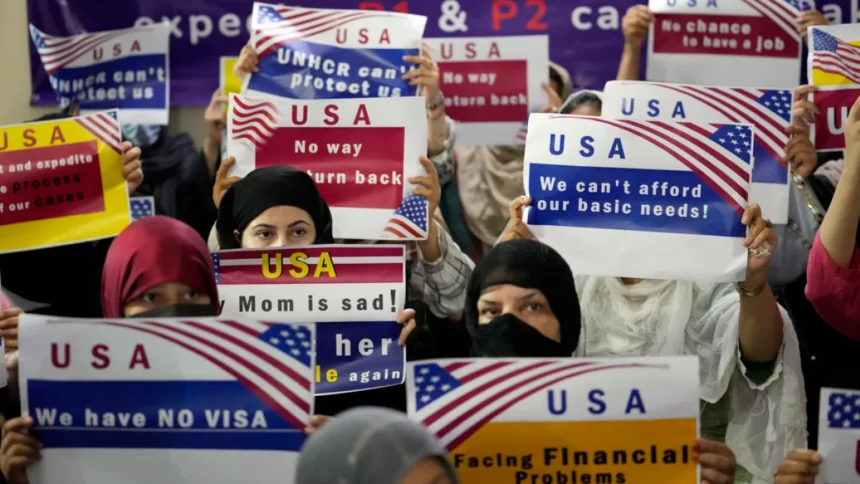
The discussions come amid broader changes to U.S. immigration and border management policies, with Washington seeking greater international cooperation in addressing migration challenges involving individuals from countries facing political instability, conflict or other humanitarian crises.
Although details of the specific categories of persons under discussion have not been disclosed publicly, several Caribbean governments have recently acknowledged approaches from the United States regarding potential partnerships on migration management. Antigua and Barbuda’s Cabinet has sought to reassure the public that any agreement will be carefully structured and subject to rigorous national oversight.
Cabinet also pointed to the long-standing relationship between Antigua and Barbuda and the United States, describing the two countries as important strategic partners with decades of cooperation spanning tourism, trade, investment, education, security and development assistance.
The United States remains Antigua and Barbuda’s largest tourism source market, accounting for a significant share of annual visitor arrivals. The two countries also cooperate closely through regional security initiatives, law enforcement partnerships and disaster preparedness programmes, making the relationship one of the country’s most significant bilateral partnerships.
Against that backdrop, Cabinet agreed that Antigua and Barbuda should continue engaging constructively with the U.S. administration on matters of mutual interest, including migration and border management, while ensuring that national security, public health and social stability remain paramount.
Officials stressed that the Government’s approach seeks to balance humanitarian responsibility with prudent governance, noting that any final arrangement must reflect the country’s constitutional authority, legal framework and capacity to accommodate new residents responsibly.
Cabinet reaffirmed its commitment to maintaining strong diplomatic ties with the United States while continuing negotiations in a manner that protects Antigua and Barbuda’s sovereignty and advances the national interest. Government officials indicated that discussions will continue until both sides are satisfied that any agreement adequately safeguards the country’s security, values and long-term development objectives.