

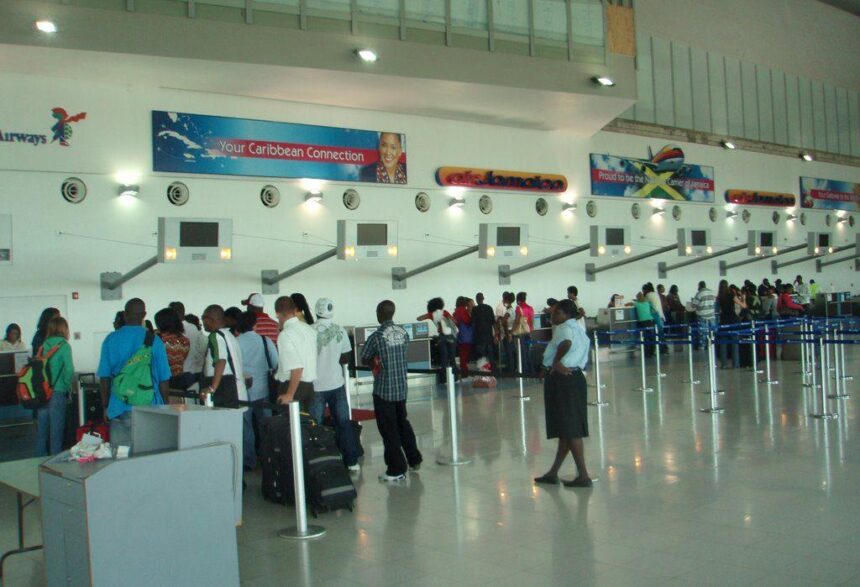
International travellers arriving in and departing from Antigua and Barbuda will soon pay a higher Passenger Head Tax following Cabinet’s approval of an increase aimed at helping the country meet its financial commitments to key regional institutions.
The measure will see the tax rise from US$40 to US$50 per passenger, with Government indicating that the additional revenue will be directed towards supporting organisations that play a critical role in civil aviation and the administration of justice throughout the Eastern Caribbean.
According to Cabinet, the increase forms part of a broader effort to ensure the long-term sustainability of regional institutions whose services are essential not only to Antigua and Barbuda but to neighbouring member states.
Among the principal beneficiaries will be the Eastern Caribbean Civil Aviation Authority (ECCAA) and the Eastern Caribbean Supreme Court (ECSC), both of which depend on contributions from participating governments to carry out their mandates.
The ECCAA serves as the aviation regulatory authority for six member states of the Organisation of Eastern Caribbean States (OECS), overseeing safety standards, aircraft certification, licensing and compliance with international aviation regulations. Its work is particularly important for Antigua and Barbuda, where tourism remains the country’s largest economic sector and air travel serves as the primary gateway for visitors.
Similarly, the Eastern Caribbean Supreme Court provides judicial services to nine member states and territories, including Antigua and Barbuda. The court administers both the High Court and Court of Appeal, ensuring the consistent application of law throughout the sub-region while helping to preserve judicial independence and access to justice.
Cabinet noted that Antigua and Barbuda continues to derive substantial benefits from both institutions and therefore has a responsibility to contribute meaningfully towards their continued operation.
Officials indicated that maintaining well-funded regional bodies is essential to safeguarding aviation safety, supporting investor confidence, facilitating economic growth and preserving the regional systems upon which citizens and businesses depend.
While international passengers will bear the increased charge, the Government has opted to exempt travel within the Caribbean Community (CARICOM), maintaining its long-standing commitment to encouraging regional movement and strengthening Caribbean integration.
The decision reflects broader regional efforts to make travel between Caribbean countries more affordable and accessible, even as governments continue to face mounting financial obligations associated with maintaining shared institutions.
In recent years, Caribbean governments have increasingly relied on passenger-related levies to finance aviation infrastructure, tourism development and regional services without placing additional pressure on domestic taxpayers. Similar charges exist throughout much of the Caribbean, with revenues often earmarked for airport improvements, security enhancements or statutory obligations.
Cabinet expressed confidence that the revised tax structure will provide a stable and predictable source of revenue to address both outstanding and future commitments while limiting the financial impact on residents and visitors.
The administration also reaffirmed its commitment to prudent fiscal management, noting that investments in regional institutions ultimately contribute to the country’s economic resilience and international competitiveness. Reliable aviation oversight, an effective judicial system and strong regional cooperation, Cabinet observed, remain fundamental pillars supporting Antigua and Barbuda’s tourism industry, investment climate and broader development agenda.
The increase will not take immediate effect. Cabinet advised that the adjustment will be implemented only after the completion of the necessary legislative and administrative procedures, with further details—including the effective date—to be announced in due course.