
The winners of the 2025-2026 Young Environmental Scientists (YES) Competition, hosted by Macmillan Education Caribbean, have been announced, highlighting the innovation, creativity and problem-solving abilities of students from across the region.
The annual YES Competition brings together primary and secondary school students from across the Caribbean, challenging them to identify pressing environmental issues within their communities and propose practical, science-based solutions. The initiative continues to foster environmental awareness, teamwork and critical thinking among young learners.
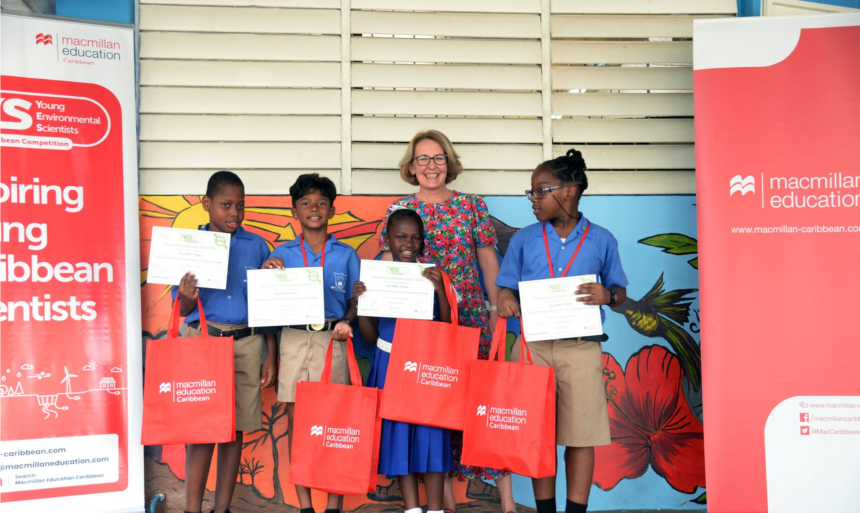
In the primary category, first place was awarded to the Eco-Hero Team of Tunapuna Presbyterian Primary School in Trinidad and Tobago. Second place went to the SVG Wildlife Warriors of Calliaqua Anglican Primary School in St Vincent and the Grenadines, while third place was claimed by the Sea to Structure Solutionists of Grand Roy Government School in Grenada.
The Eco-Hero Team impressed judges with a practical initiative aimed at reducing single-use plastic waste within their school. Their project encouraged students to bring and reuse their own utensils instead of relying on disposable plastic spoons It was supported by awareness campaigns, poster competitions and data tracking to measure behavioural change. The initiative demonstrated how simple actions can drive meaningful environmental impact within school communities.
In the secondary category, Queen’s College in Guyana secured first place through its team, ResistRx. Five Rivers Secondary School in Trinidad and Tobago captured both second and third places with the GASH – Giant African Snail Hunters Association and the Wes4G 4-H Club, respectively.
The winning secondary team, ResistRx, was recognised for its research into the improper disposal of antibiotics and its environmental consequences. The team explored how antibiotic residues enter the environment and contribute to antimicrobial resistance in soil ecosystems, particularly through household waste and small-scale farming practices. Their proposed solutions included the introduction of community disposal bins, a composting system for farmers and a public education campaign. A pilot study conducted by the team found that while awareness of the issue was low, there was a willingness among community members to adopt safer disposal practices.
Winning teams in both categories will receive a half-day hands-on science workshop, a class set of science books, a US$250 bookstore voucher, as well as trophies, medals and certificates. Second-place teams will receive a US$100 bookstore voucher along with trophies, medals and certificates. This is Queens College second consecutive win.
Organisers have issued a renewed call for wider Caribbean participation in the 2026-2027 edition.
Marketing Manager of Macmillan Education Dr. Katy Anyasoro said, “the competition continues to grow as a regional platform for showcasing Caribbean students’ innovation and environmental stewardship.”
She added, “This year’s projects, which ranged from reducing plastic waste to addressing antimicrobial resistance, reflect the increasing awareness among young people of the need for sustainable solutions to real-world challenges.”
A highlight video showcasing entries from across the Caribbean is expected to be released soon, along with photographs from prize-giving ceremonies taking place in participating countries.
The Young Environmental Scientists Competition invites students aged 7 to 18 to explore environmental issues and develop innovative, actionable solutions through research, experimentation and collaboration, helping to prepare the next generation of Caribbean scientists and environmental leaders.