

CCJ President Winston Anderson has called for the establishment of an International Climate Injuries Compensation (ICIC) Fund to provide financial support to countries impacted by extreme weather events linked to climate change.
The proposal was presented on March 16, 2026, during the Inter-American Seminar on Climate Emergency and Human Rights in Brasília, Brazil. The event was hosted by the Inter-American Court of Human Rights (IACtHR) and Brazil’s Supreme Court as part of the 187th Ordinary Period of Sessions of the regional tribunal.
According to Anderson, the proposed fund would be financed by corporate entities whose activities contribute significantly to greenhouse gas emissions. The initiative is intended to provide compensation for loss and damage caused by severe climate-related events, particularly in small and vulnerable states.
The seminar examined the implications of Advisory Opinion No. 32 of 2025 issued by the IACtHR, which outlines states’ obligations to regulate private sector activities contributing to climate change and affirms the right to a healthy environment. While acknowledging the importance of the advisory opinion in establishing a legal framework, Anderson argued that additional practical mechanisms are needed to support countries facing immediate climate-related devastation.

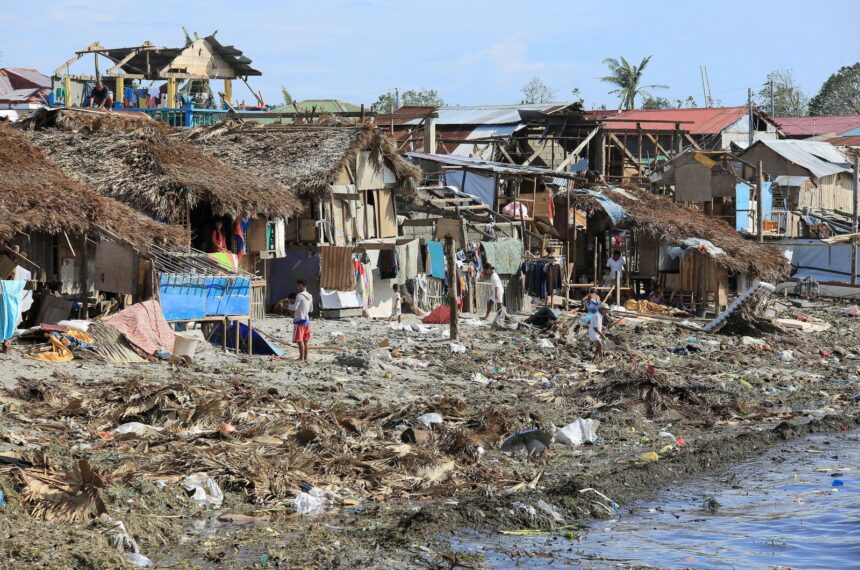
He pointed to the impact of extreme weather events in the Caribbean, including damage caused by Hurricane Melissa in October 2025, as evidence of the urgent need for accessible and adequate compensation systems.
Anderson also referenced the Fund for Responding to Loss and Damage (FRLD), established under the United Nations Framework Convention on Climate Change process and discussed at COP30 in Belém, Brazil, in November 2025. He expressed concern over the pace of its capitalisation, noting that current funding levels appear insufficient when compared to the scale of losses experienced by affected countries.
As an example, he cited Jamaica’s engagement with the fund, indicating that while the country may access approximately US$20 million, it has sustained damages estimated between US$6 billion and US$7 billion.
Under the proposed ICIC model, multinational corporations exceeding defined emissions thresholds would be required to make mandatory contributions through the states in which they operate. The fund would have legal standing and could be subject to legal action in jurisdictions where climate-related damage occurs.
Anderson suggested that the mechanism could be established through an international convention, drawing on the model of the International Oil Pollution Compensation Funds, which provides compensation for oil pollution damage and is financed by industry stakeholders.
The proposal aligns with the “polluter pays” principle and reflects established norms in international law requiring states to prevent environmental harm beyond their borders.
Anderson had previously advanced the concept earlier this year during a keynote address at the CANARI Partners Forum held in Barbados, where he addressed climate justice from a Caribbean perspective.