

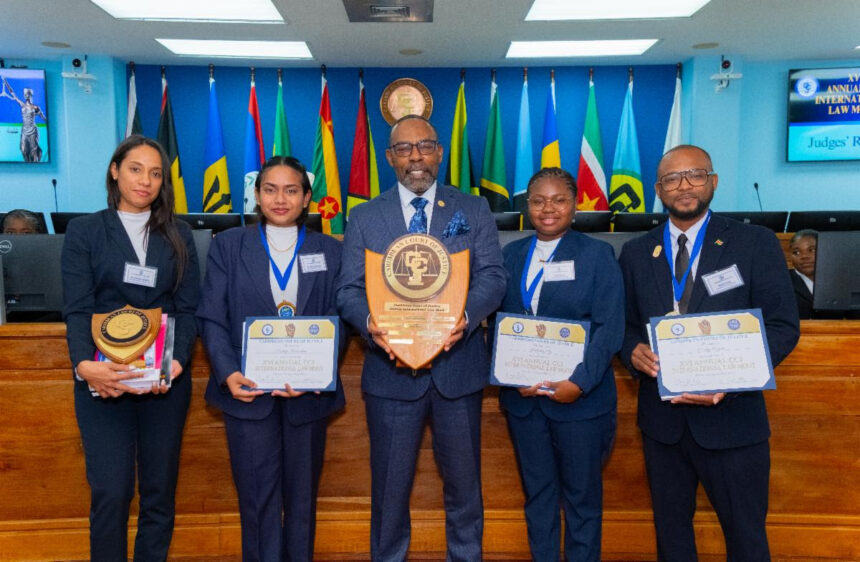
The Anton de Kom University of Suriname has secured a landmark victory at the 16th Annual Caribbean Court of Justice International Law Moot, claiming the overall title for the first time in the institution’s history.
The competition, held on Friday, March 27, 2026, brought together regional jurists, members of the diplomatic corps, academics, and judges of the Caribbean Court of Justice. The Suriname-based university also walked away with the award for Best Academic Institution, a distinction it previously earned in 2022. The University of the West Indies Cave Hill, last year’s champions, placed second, while the Eugene Dupuch Law School finished third overall.
The winning team—comprised of Deldritha Afie, Rashly Resida, and Reshaya Ramadhin—was praised by judges for its strong advocacy. The team was supported by advisor Shaiesta Nabibaks and technical advisor Nailah van Dijk.
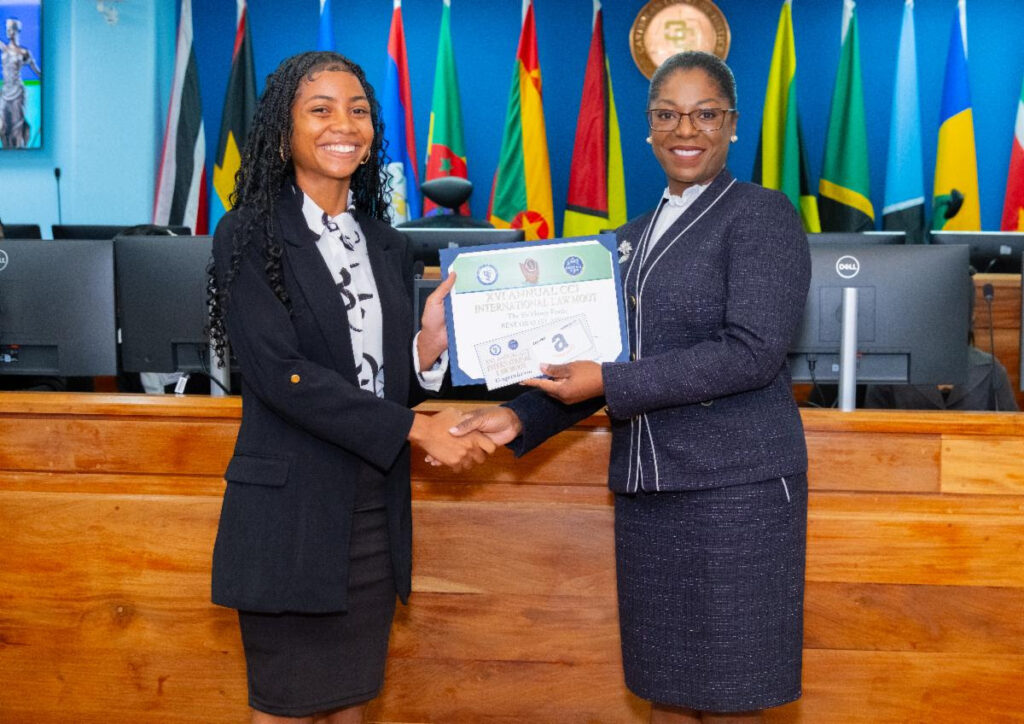
Individual honours were also presented, with Lindxee Collins of The University of the West Indies Cave Hill receiving the Sir Henry Forde Prize for Best Oralist. The institution also captured the prize for Best Written Submission.
The annual moot provides law students from across the Caribbean with an opportunity to argue cases before CCJ judges in the Court’s Original Jurisdiction, focusing on regional legal issues and the interpretation of CARICOM law.
Speaking at the opening ceremony, CCJ President Winston Anderson emphasized the competition’s role in strengthening awareness of the CARICOM Single Market and Economy and the Revised Treaty of Chaguaramas. He noted that the moot allows students to engage directly with the legal principles governing regional integration, while also deepening public understanding of the Court’s work and judgments.
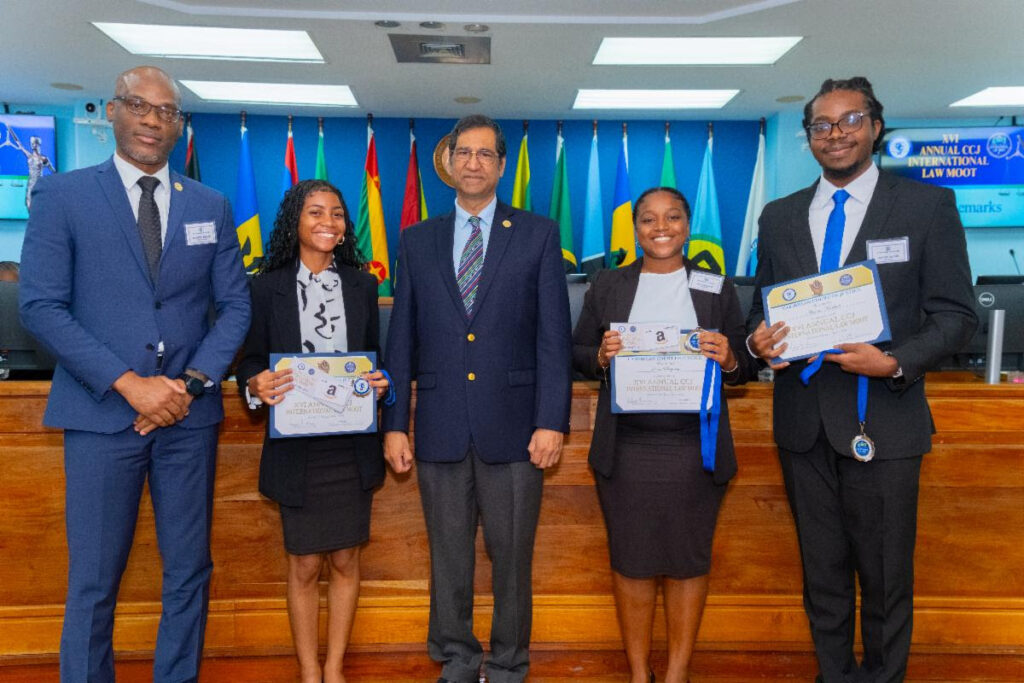
He added that the initiative aligns with the CCJ’s Strategic Plan 2025–2032, particularly its focus on expanding stakeholder engagement and strengthening ties with academic institutions.
At the closing ceremony, CCJ Judge Rajnauth-Lee, who chairs the Law Moot Committee, underscored the Court’s commitment to nurturing the region’s future legal professionals, describing the event as an investment in the next generation.
This year’s competition featured nine teams representing institutions across the Caribbean, including the Hugh Wooding Law School, Norman Manley Law School, University of Guyana, and campuses of The University of the West Indies in Mona and St Augustine, along with Suriname’s FHR Institute of Higher Education.
Participants argued a case centred on the free movement of skilled nationals within CARICOM, addressing issues such as the rights to reside, work, and access education in host member states.
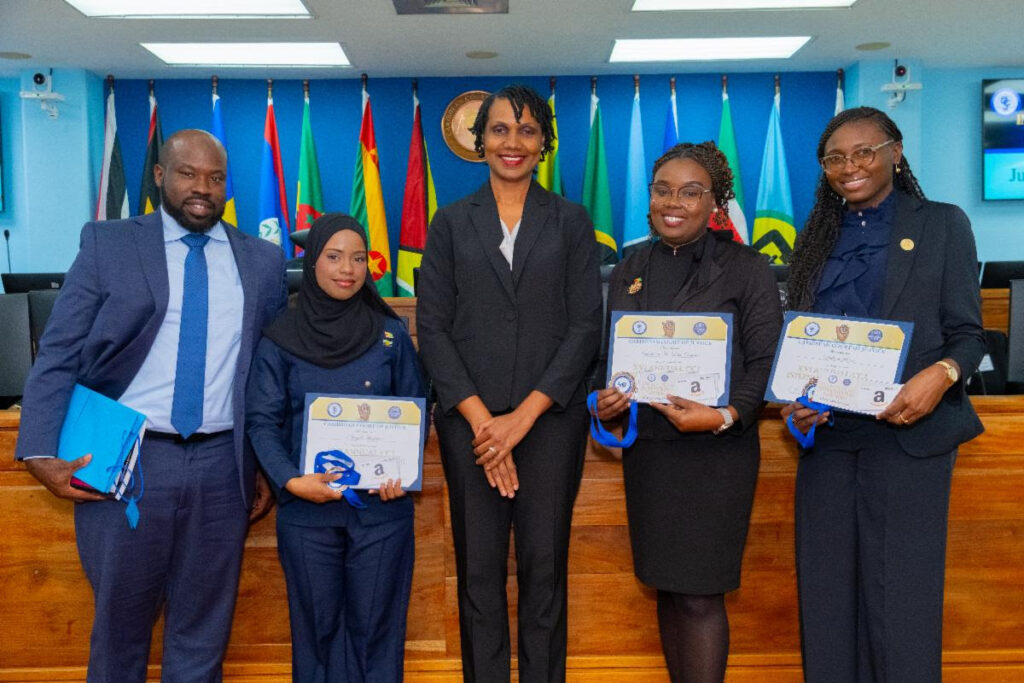
The moot was adjudicated by a panel including CCJ judges Peter Jamadar, Chantal Ononaiwu, who served as chair, and Arif Bulkan.
In a new addition to this year’s event, legal researcher Grigory Gorbun attended to study the competition as part of a broader international research project examining law moots as platforms for developing professional identity and understanding of the rule of law.