

Panama City, Panama – Small Island Developing States (SIDS) have achieved a historic milestone at the Twenty-Third Session of the Committee for the Review of the Implementation of the Convention (CRIC23) of the United Nations Convention to Combat Desertification (UNCCD), having officially launched the Caribbean Soil Information System (CARSIS)- a pioneering, SIDS-driven digital platform designed to revolutionize science- based decision making, land degradation monitoring, environmental reporting, and data sovereignty for vulnerable island states.
This innovative platform was developed through collaboration between the Partnership Initiative for Sustainable Land Management (PISLM) and the United Nations Food and Agriculture Organization of the United Nations (FAO), with funding from the Global Environment Facility (GEF), under the Caribbean Small Island Developing States (SIDS) multicountry soil management initiative for Integrated Landscape Restoration and climate-resilient food systems (SOILCARE).
“SIDS now have a model created by and for SIDS,” noted Dr. Ronen Francis, Executive Director of PISLM. “This durable system positions PISLM as the regional repository for Land Degradation Neutrality data and indicators-ensuring consistency, continuity, and high-quality monitoring across reporting cycles.”
The SIDS Commissioner Calvin James emphasized the broader significance of this achievement, and expressed hope that the Caribbean’s example will inspire the other SIDS to do it in their region as well” and that, ” They can borrow the best practices,” to close the technical capacity gaps and institutional memory loss that exist.
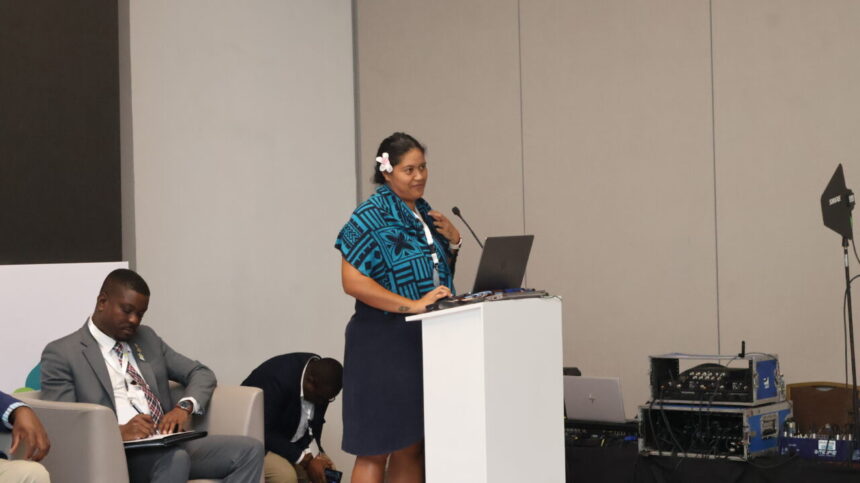
Pacific SIDS also underscored the vital connection between data and resilience. Speaking at the launch, Tekura Moeka’a, Environmental Policy and Planning Manager of the Cook Islands stressed that for island nations, data is personal and deeply linked to food security, drought preparedness, and the protection of cultural identity.
“Robust data systems and people-centered monitoring are fundamental to building the resilient, land-secure futures we need,” she said. “Reporting tools must be more than an obligation—they must be a platform for empowering SIDS.”
African and Indian Ocean SIDS (AIS) representative Anoop Khurun Poojanraj, who is the Conservator of Forests, Ministry of Agro-Industry and Food Security- Mauritius, indicated that while this platform exists, the reports from platforms like CARSIS, should be simplified for use of the decision makers.
Offering strong support for the new platform, Karl Augustine SIDS representative from the Caribbean, emphasized the transformative value of the system for the technical officers in the Caribbean:
“Having a platform that will enable us to have information in one place that is acceptable, accessible, and ensures continuity will help us tremendously. The tools being developed will enable us to better represent the work that has been done and is ongoing, so that when we come to forums like this, we are no longer singled out for not having certain quality data. This is something that we must applaud PISLM and our partners for.”
The launch of CARSIS comes at an important stage for SIDS, who are preparing for the Performance Review and Assessment of Implementation System (PRAIS) Reporting. Caribbean countries will be able to report their own data through home grown systems, enhancing accuracy, cutting reporting costs, and ensuring that global assessments reflect local realities.
The launch took place during the UNCCD SIDS Forum Side Event, titled “Strengthening Land Monitoring, Reporting and Partnerships,” held on 2 December 2025 at the Panama Convention Center. SIDS delegates from the Caribbean, Pacific, and AIS regions celebrated the achievement as a collective step forward for global SIDS cooperation.